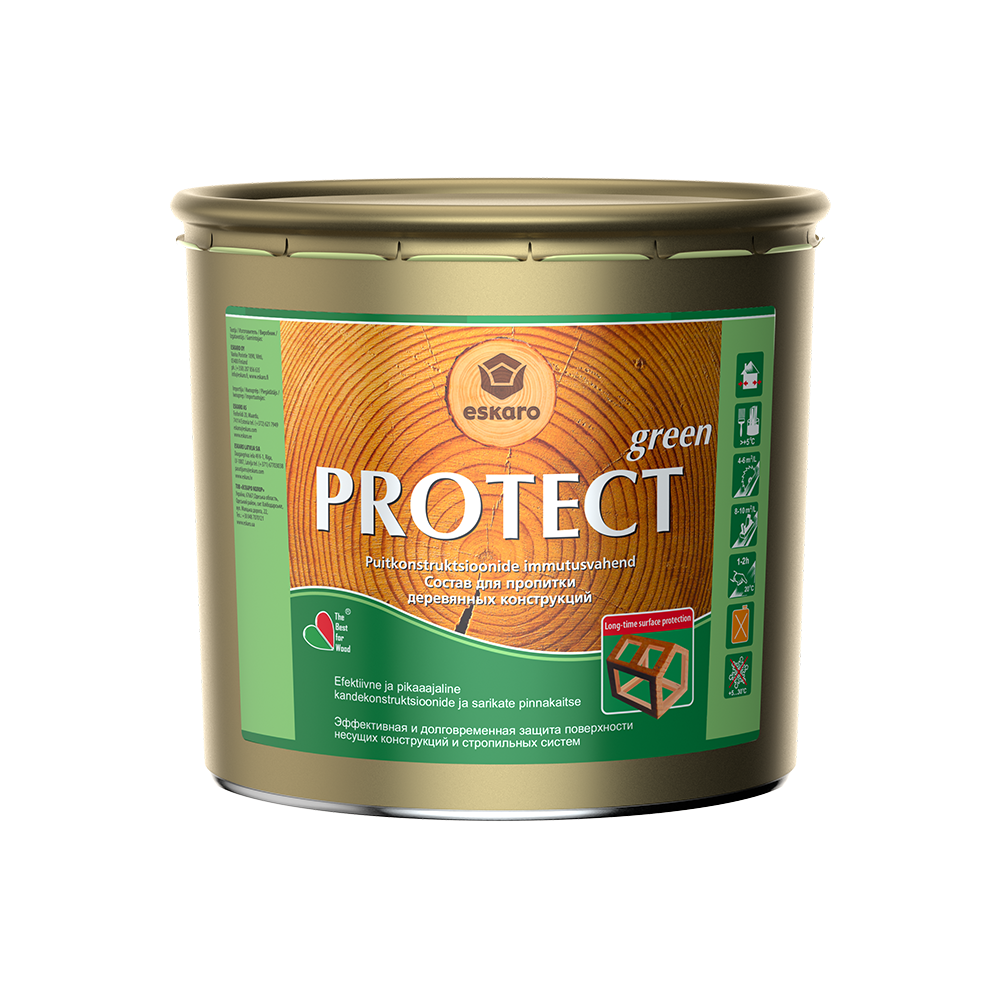
Effective, long-lasting surface protection for load-bearing structures and rafters
Colour: Light green. Protect Green is not intended for decorative treatment of wood surfaces; its greenish tint serves as an indicator to make the treated surface visible.
Consumption: Single-coat coverage: 8–10 m²/L for planed boards and 4–6 m²/L for sawn boards; Dipping method: 30–60 L/m³.
Drying time: 1…2 hours at a temperature of +23 °C and relative humidity of 50%, depending on weather conditions, wood type, and layer thickness.
Volume: 2,7 L – 4,5 L – 9 L
Deep impregnation of concealed wooden structures and wood surfaces.
EU VOC (Volatile Organic Compounds) content limit values: subcategory h – 750 g/L. Maximum VOC content in the ready-to-use product: < 750 g/L.
Conditions of use for wood:
New or old undamaged wooden roof load-bearing structures (rafters, wall plates), floor and ceiling beams, and other concealed structures where decorative treatment is not required. Suitable for treating wood material in humid environments, such as structures in contact with foundations. Not intended for treating exposed indoor structures or outdoor structures in contact with water or soil, or exposed to direct sunlight, as prolonged UV radiation reduces the protective properties of the product. The treated surface acquires a greenish tint, requires no maintenance, renewal, additional protection, or overcoating. If desired, the surface can be painted over 3 months after treatment.
New untreated or old undamaged wood surfaces and wooden structures. Suitable for both sawn and planed surfaces. Do not use on biologically damaged surfaces.
The wood surface to be treated must be dry; wood moisture content must not exceed 20%. The appropriate working temperature is above +5 °C, with a maximum relative humidity of 80%. Clean the surface thoroughly from sawdust, dust, grease, oil, wax, and other contaminants. Pre-treat surfaces affected by blue stain fungi and mold with the wood cleaner WoodClean, and moldy or microflora-covered surfaces with the anti-mold agent Biotol E. Previously painted surfaces must be completely cleaned down to bare wood using a scraper, stiff-bristled brush, hot air gun, or OPS Pro paint remover. Remove darkened areas mechanically with a stiff-bristled brush. Replace any rotten, decayed, or fungus-damaged wood components with new ones. For fastening wooden elements, it is recommended to use galvanized fasteners. Untreated metal parts must be protected against rust with an anti-corrosion primer before treatment.
Avoid performing work during rain, fog, hot weather, or direct sunlight. Pay attention to constructive wood protection methods – proper drainage, ventilation, and waterproofing of walls and roof. The effectiveness of wood preservatives depends on adherence to proper constructive wood protection practices.
Ready to use. Do not dilute! Stir thoroughly before use. Apply generously to the surface with a brush several times using the “wet-on-wet” method until the wood is fully saturated or use the dipping method. Pay special attention to impregnating wood end grains and surfaces exposed to moisture. Maximum wood protection is achieved at a consumption rate of 0.2 L/m².
Brush, dipping method.
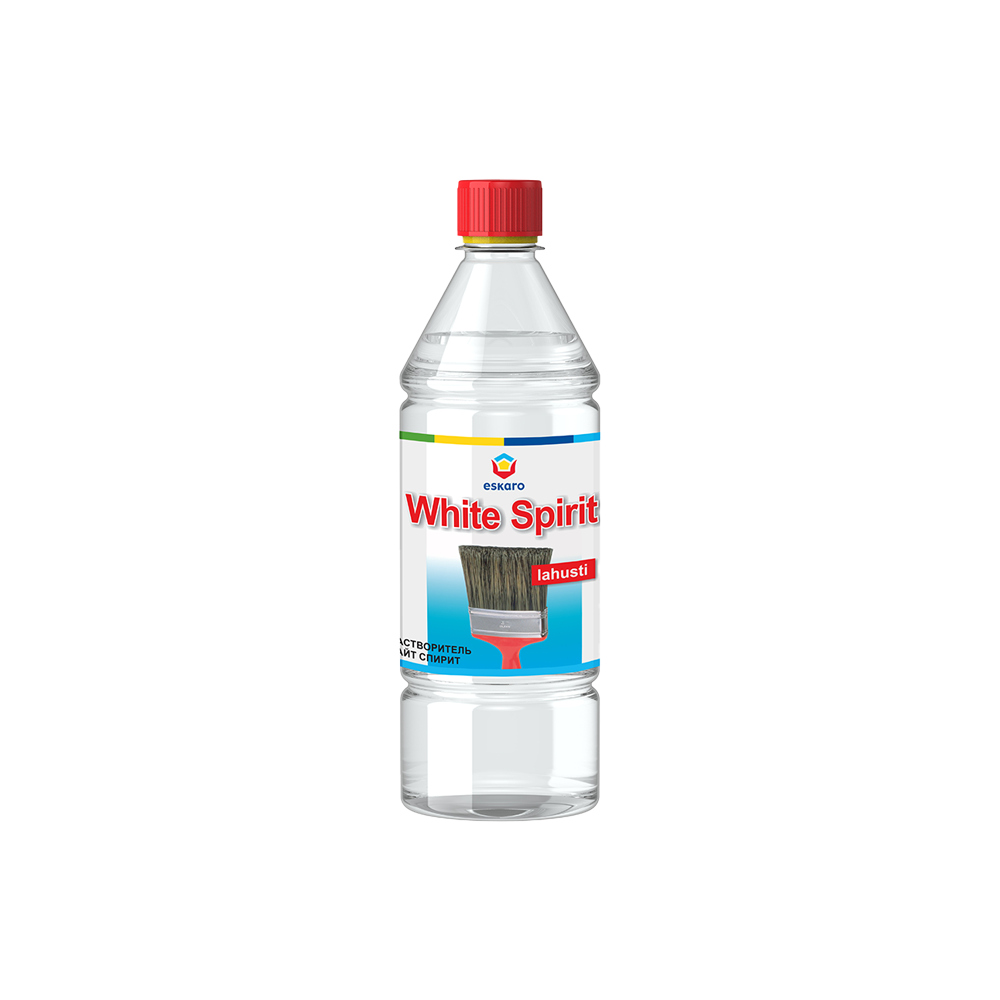
Clean tools with White Spiritiga.
Caution! Harmful to aquatic organisms, long-lasting effects. Harmful if swallowed. May be fatal if swallowed or enters airways. May cause allergic skin reaction. Repeated exposure may cause skin dryness or cracking. Contains: hydrocarbons, C10–C13, n-alkanes, isoalkanes, cyclics, <2% aromatics, neodecanoic acid, iron salt, 4,5-dichloro-2-octyl-2H-isothiazol-3-one. Wear protective gloves, face mask, protective clothing, respiratory protection, and safety footwear. Wash skin thoroughly after handling. Avoid inhalation of vapor or spray mist. IF SWALLOWED: Immediately contact a POISON CONTROL CENTER or doctor. When seeking medical advice, take the product packaging or label with you. UFI: G330-E0V0-500W-NAJU IF ON SKIN: Wash with plenty of water. Keep out of reach of children.
Avoid or minimize the generation of residues. Do not pour into the sewage system. Prevent release into the environment. Dispose of as chemical waste in accordance with applicable regional waste legislation. Liquid residues must be delivered to a hazardous waste collection point (Paint and varnish waste containing organic solvents or other hazardous substances – waste code 08 01 11). Information about collection points is provided by the local municipality or the Environmental Board. Dried residues may be placed in household waste containers. Empty, dry packaging must be taken to a packaging waste collection point for recycling (Waste code 15 01). Before recycling, returned containers must be properly cleaned, code 15 01. For larger quantities, contact the Estonian Recycling Organization NGO at eto@eto.ee.
Store and transport in intact containers at the temperature between +5…30°С. Protect from exposure to freezing and direct sunlight.
The information concerning the product is based on the results of laboratory tests and practical use of the product depending on the location and conditions of its use. As the manufacturer, we guarantee the quality of the product and provide the best recommendations for its appropriate application. As the manufacturer, we cannot control the conditions and circumstances of product transportation, storage and application and numerous other factors that affect its use. Thus, we shall not bear responsibility for the damage caused by ignoring the instructions for use or transportation, by noncompliance with storage conditions and timeframes or by inappropriate application of the product. The manufacturer reserves the right to alter product information at their discretion without prior notice.
Consumption is calculated for 1 layer